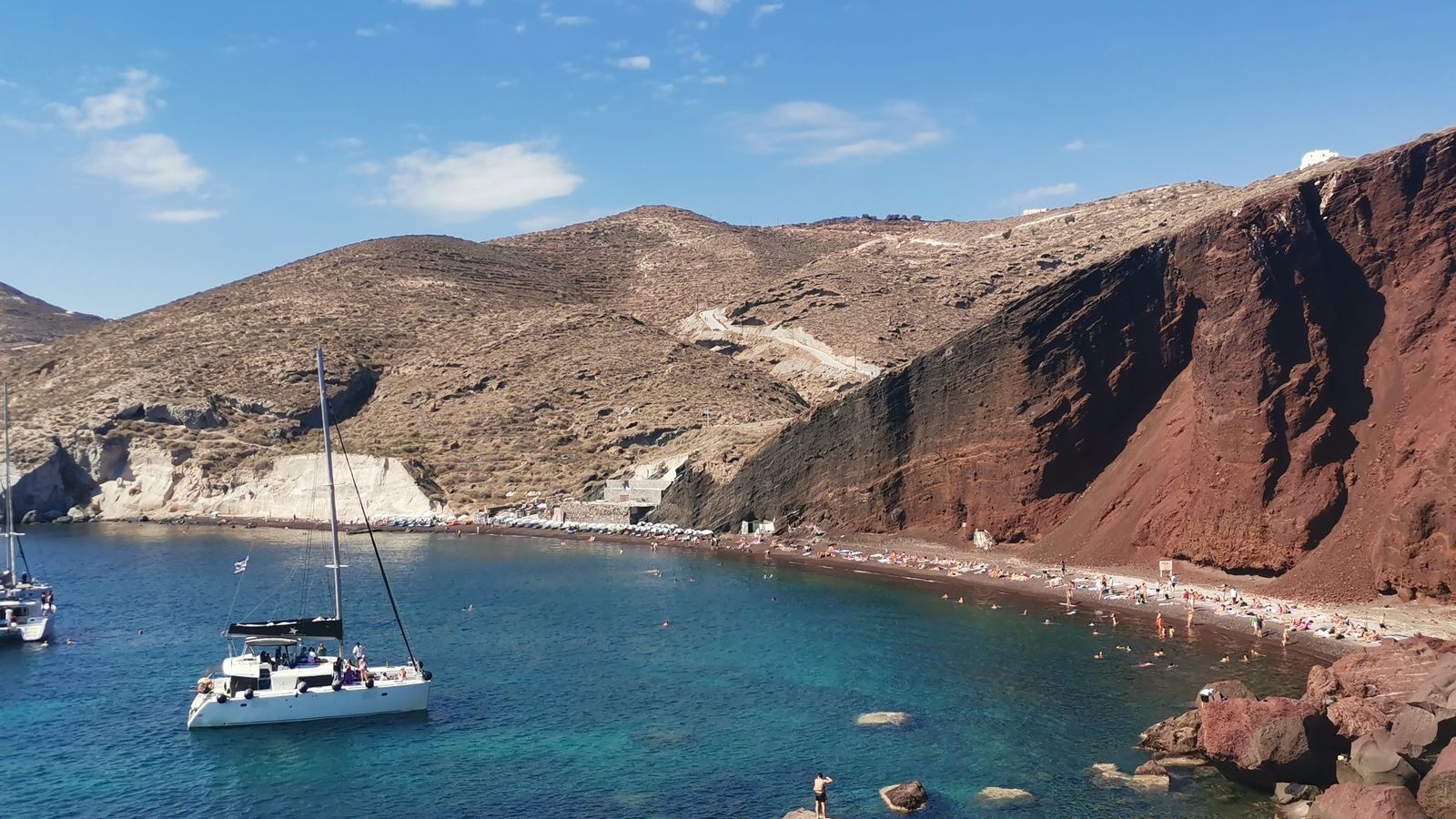
Si può nuotare a Santorini e l'acqua è sicura? Il mare di Santorini è abbastanza caldo per nuotare comodamente da giugno a ottobre, raggiungendo il picco di circa 24-25 °C (75-76 °F) ad agosto e settembre. Nuotare è sicuro: non ci sono squali pericolosi e le meduse appaiono solo occasionalmente. L'acqua del rubinetto è desalinizzata e tecnicamente conforme agli standard UE, ma quasi tutti bevono acqua in bottiglia perché ha un sapore salmastro. Di seguito è riportata la temperatura del mare mese per mese, insieme a risposte oneste su meduse, ricci di mare e acqua potabile.
Temperatura del mare di Santorini per mese (2026)
Santorini si trova nel Mar Egeo meridionale, dove il mare si riscalda lentamente durante la primavera e trattiene il calore fino in autunno. Queste sono le temperature medie del mare mensili, quindi le letture giornaliere possono variare di uno o due gradi a seconda del vento e della profondità.
| Mese | Temp. media del mare | °F | Giudizio sulla nuotata |
|---|---|---|---|
| Gennaio | 16,5 °C | 62 °F | Troppo freddo per la maggior parte |
| Febbraio | 15,5 °C | 60 °F | Mese più freddo |
| Marzo | 15,5 °C | 60 °F | Troppo freddo |
| Aprile | 16,5 °C | 62 °F | Fresco, territorio delle mute |
| Maggio | 18,5 °C | 65 °F | Rinfrescante, bagni brevi |
| Giugno | 22 °C | 72 °F | Piacevole |
| Luglio | 23,5 °C | 74 °F | Caldo |
| Agosto | 24,5 °C | 76 °F | Il più caldo dell'anno |
| Settembre | 24 °C | 75 °F | Caldo e stabile |
| Ottobre | 22 °C | 72 °F | Sempre confortevole |
| Novembre | 19,5 °C | 67 °F | Raffreddamento rapido |
| Dicembre | 17,5 °C | 64 °F | Freddo |
Medie basate su dati climatici a lungo termine per Santorini (Fira). Aspettatevi che l'acqua sia più fresca al mattino e più calda nel tardo pomeriggio.
Quando il mare è abbastanza caldo per nuotare?
Per la maggior parte dei visitatori, il periodo confortevole per nuotare va dalla metà di giugno alla metà di ottobre, quando il mare si mantiene tra i 22 e i 24,5 °C. Luglio, agosto e settembre sono i mesi affidabili con acque calde e coincidono con l'alta stagione turistica dell'isola. Maggio e inizio giugno sono adatti al bagno se non vi dispiace un ingresso rinfrescante, mentre l'acqua rimane troppo fresca per la maggior parte delle persone da dicembre ad aprile. Se cercate un mare caldo e folle più ridotti, la fine di settembre e l'inizio di ottobre sono il momento ideale.
Ci sono meduse o squali a Santorini?
Gli squali non sono una preoccupazione realistica. A Santorini non è mai stato registrato un attacco di squalo e in tutta la Grecia ci sono stati solo circa 15 incidenti con squali riportati negli ultimi 180 anni. Gli squali che potreste realisticamente incontrare, come il piccolo squalo spinoso, sono innocui per i nuotatori.
Le meduse sono più comuni ma ancora occasionali. La maggior parte delle meduse del Mar Egeo, tra cui la medusa mediterranea marrone e la medusa barile, non pungono o pungono appena. Quella a cui fare attenzione è la medusa viola (Pelagia noctiluca), una piccola medusa viola il cui pungiglione provoca un dolore acuto e bruciante. Gli sciami arrivano e se ne vanno con le correnti e il vento, quindi se i locali o un bar sulla spiaggia menzionano le meduse quel giorno, scegli un'altra spiaggia o aspetta un giorno. Sciacqua il pungiglione con acqua di mare, rimuovi eventuali tentacoli e vai in farmacia se la reazione è forte.
Il mare è sicuro per nuotare?
Le condizioni di nuoto sono generalmente sicure, ma Santorini ha alcune peculiarità vulcaniche da conoscere:
- Ricci di mare. Il fondale di molte spiagge e della caldera è roccioso e vulcanico, e i ricci di mare neri si attaccano alle rocce. Le loro spine si staccano dolentemente sui piedi nudi, quindi le scarpe da acqua sono la cosa più utile da portare.
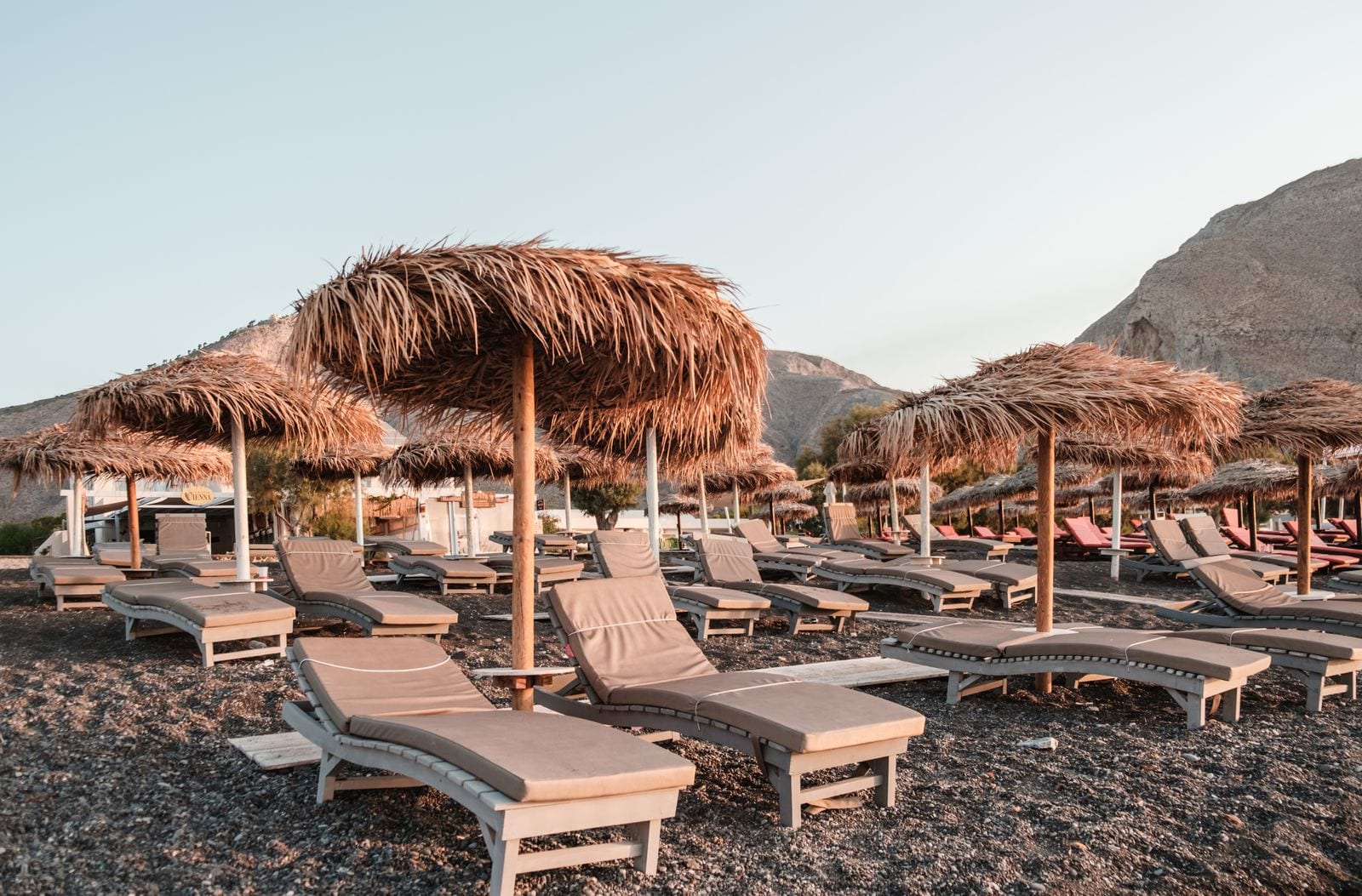
- Bagnini solo sulle spiagge organizzate. Le grandi spiagge di sabbia nera come Kamari e Perissa sono spiagge Bandiera Blu con bagnini di servizio durante la stagione estiva, ma la maggior parte delle piccole calette e dei punti di immersione nella caldera non ne hanno, quindi sorvegliate attentamente i bambini lì.
- Il vento meltemi. A luglio e agosto il vento settentrionale meltemi può sollevare acqua mossa e correnti più forti, specialmente sulle coste esposte. Nuotate nei giorni riparati e rimanete entro la vostra profondità.
- Sabbia nera calda. Le spiagge vulcaniche di Santorini si scaldano intensamente a mezzogiorno. Sandali e un tappetino da spiaggia salvano i vostri piedi.
- Acqua profonda della caldera. I punti di immersione sul lato della caldera scendono rapidamente e non hanno un ingresso poco profondo graduale, quindi sono adatti ai nuotatori esperti piuttosto che ai bambini piccoli.
Si può bere l'acqua del rubinetto a Santorini?
Santorini non ha fonti naturali di acqua dolce, quindi quasi tutta l'acqua del rubinetto è acqua di mare trattata attraverso impianti di desalinizzazione a osmosi inversa. Quest'acqua è trattata per soddisfare gli standard greci e dell'UE per l'acqua potabile, ed è adatta per lavarsi i denti, fare la doccia e lavare il cibo. Nella pratica, tuttavia, quasi tutti i locali, gli hotel e i ristoranti bevono acqua in bottiglia, perché l'acqua desalinizzata spesso ha un sapore visibilmente salmastro o salato e la rete non è sempre uniforme sull'isola. L'acqua in bottiglia è economica e ovunque: una bottiglia da 1,5 litri costa circa €0,50 a €0,80 nei supermercati, e meno nei multipack. Se preferite ridurre la plastica, una bottiglia con filtro integrato gestisce bene il sapore.
Zanzare e altre preoccupazioni pratiche
Le zanzare sono presenti nelle calde serate estive, ma sono un fastidio piuttosto che un rischio per la salute, poiché Santorini non ha malaria o malattie trasmesse dalle zanzare comparabili. Un repellente a presa nella vostra stanza e una piccola bottiglia di repellente per le serate fuori sono sufficienti. Il pericolo estivo maggiore è il sole: la luce dell'Egeo è intensa, quindi una crema solare ad alto fattore, un cappello e l'ombra nelle ore di mezzogiorno contano più di qualsiasi cosa in acqua.