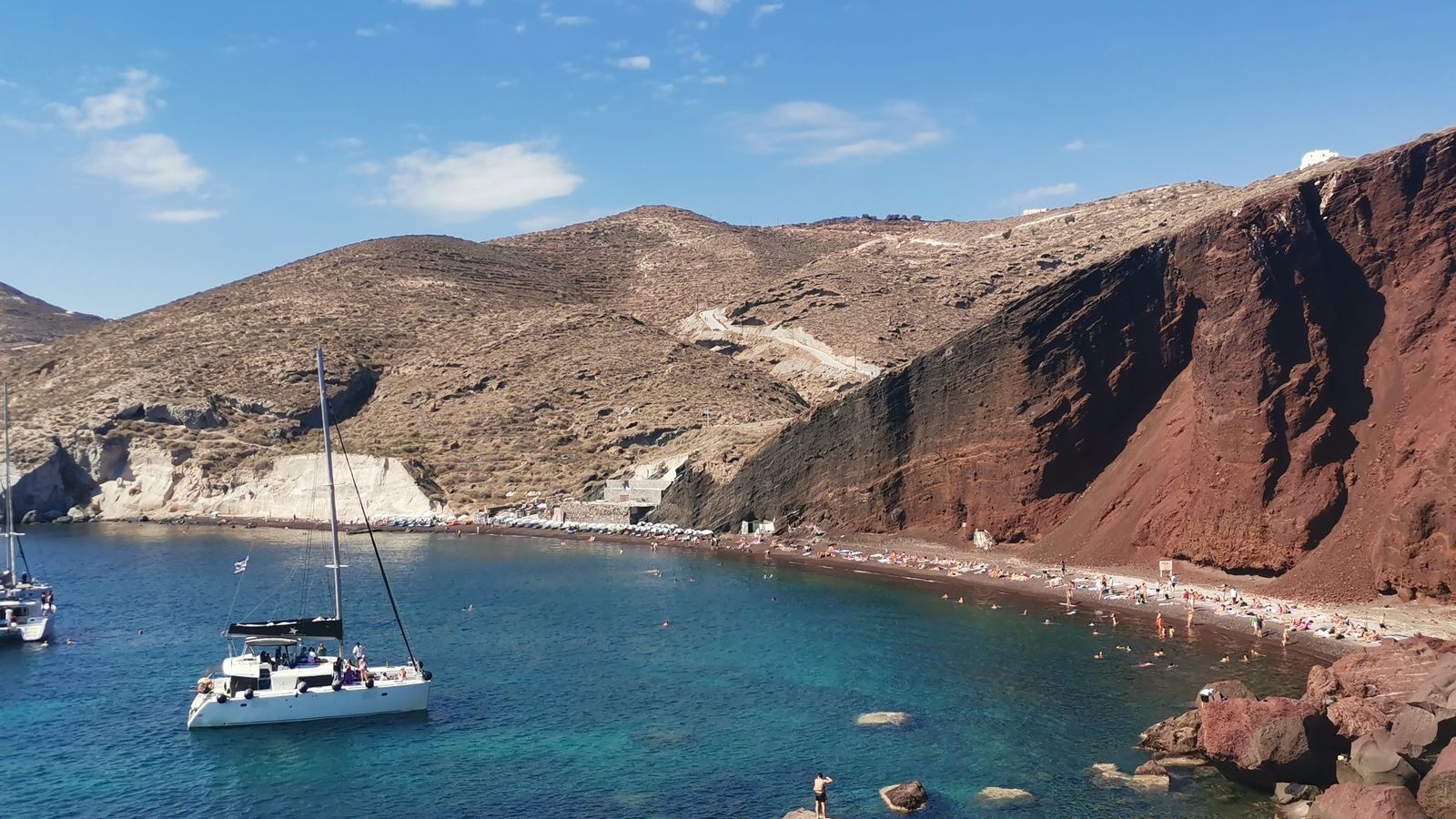
산토리니에서 수영할 수 있으며, 물은 안전한가요? 산토리니 앞바다는 6월부터 10월까지 편안한 수영이 가능할 만큼 따뜻하며, 8월과 9월에는 약 24~25°C(75~76°F)로 최고조에 달합니다. 수영은 안전합니다: 위험한 상어는 없으며, 해파리는 가끔만 나타납니다. 수도물은 담수화되어 기술적으로 EU 기준을 충족하지만, 맛이 짭짤하여 거의 모든 사람들이 생수를 마십니다. 아래는 월별 해수 온도이며, 해파리, 성게 및 음용수에 대한 솔직한 답변도 포함되어 있습니다.
산토리니 월별 해수 온도 (2026)
산토리니는 남부 에게해에 위치해 있으며, 봄 내내 바다가 천천히 따뜻해지고 가을 깊숙이까지 열기를 잘 유지합니다. 다음은 월평균 해수 온도로, 바람과 수심에 따라 일일 온도는 1~2도 정도 차이가 날 수 있습니다.
| 월 | 평균 해수 온도 | °F | 수영 적합도 |
|---|---|---|---|
| 1월 | 16.5°C | 62°F | 대부분에게 너무 춥습니다 |
| 2월 | 15.5°C | 60°F | 가장 추운 달 |
| 3월 | 15.5°C | 60°F | 너무 춥습니다 |
| 4월 | 16.5°C | 62°F | 시원하며, 웨트슈트 권장 |
| 5월 | 18.5°C | 65°F | 상쾌하며, 짧은 시간 수영 가능 |
| 6월 | 22°C | 72°F | 쾌적함 |
| 7월 | 23.5°C | 74°F | 따뜻함 |
| 8월 | 24.5°C | 76°F | 연중 가장 따뜻함 |
| 9월 | 24°C | 75°F | 따뜻하고 안정적임 |
| 10월 | 22°C | 72°F | 여전히 편안함 |
| 11월 | 19.5°C | 67°F | 빠르게 서늘해짐 |
| 12월 | 17.5°C | 64°F | 춥습니다 |
산토리니(피라)의 장기 기후 데이터를 기반으로 한 평균값입니다. 아침에는 가장 차갑게 느껴지고 늦은 오후에는 가장 따뜻하게 느껴질 것으로 예상됩니다.
바다가 수영하기에 따뜻해지는 시기는 언제인가요?
대부분의 방문객에게 편안한 수영 가능 기간은 6월 중순부터 10월 중순까지로, 이때 해수 온도는 22~24.5°C 사이를 유지합니다. 7월, 8월, 9월은 따뜻한 물이 확실한 달들로, 섬의 여행 성수기와 맞물립니다. 5월과 6월 초는 상쾌한 입수감을 꺼리지 않는다면 수영이 가능하며, 12월부터 4월까지는 대부분의 사람들에게 물이 너무 차갑습니다. 따뜻한 바다와 적은 군중을 모두 원한다면 9월 말과 10월 초가 최적의 시기입니다.
산토리니에 해파리나 상어가 있나요?
상어는 현실적인 걱정거리가 아닙니다. 산토리니에서는 상어 공격이 기록된 적이 없으며, 그리스 전체로 보아 지난 180년 동안 보고된 상어 관련 사건은 약 15건에 불과합니다. 실제로 마주칠 수 있는 상어(예: 작은 가시상어)는 수영자에게 무해합니다.
해파리는 더 흔하지만 여전히 가끔 나타납니다. 갈색 지중해 해파리와 통형 해파리를 포함한 대부분의 에게해 해파리는 쏘지 않거나 거의 쏘지 않습니다. 주의해야 할 것은 자주색 해파리(Pelagia noctiluca)로, 이 작은 보라색 해파리의 쏘임은 날카롭고 타는 듯한 통증을 유발합니다. 무리는 해류와 바람에 따라 오갔기 때문에, 현지人或 해변 바에서 그날 해파리에 대해 언급한다면 다른 해변을 선택하거나 하루를 기다리세요. 쏘인 부위는 바닷물로 헹구고, 촉수를 제거하며, 반응이 강하면 약국을 방문하세요.
바다에서 수영하는 것이 안전한가요?
수영 조건은 일반적으로 안전하지만, 산토리니에는 알아두어야 할 몇 가지 화산 특이사항이 있습니다:
- 바다 장어. 많은 해변과 칼데라 앞바다의 해저는 암석과 화산성으로 되어 있으며, 검은색 바다 장어가 바위에 붙어 있습니다. 그들의 가시는 맨발에 고통스럽게 박히므로, 물신발이 가장 유용한 패킹 아이템입니다.
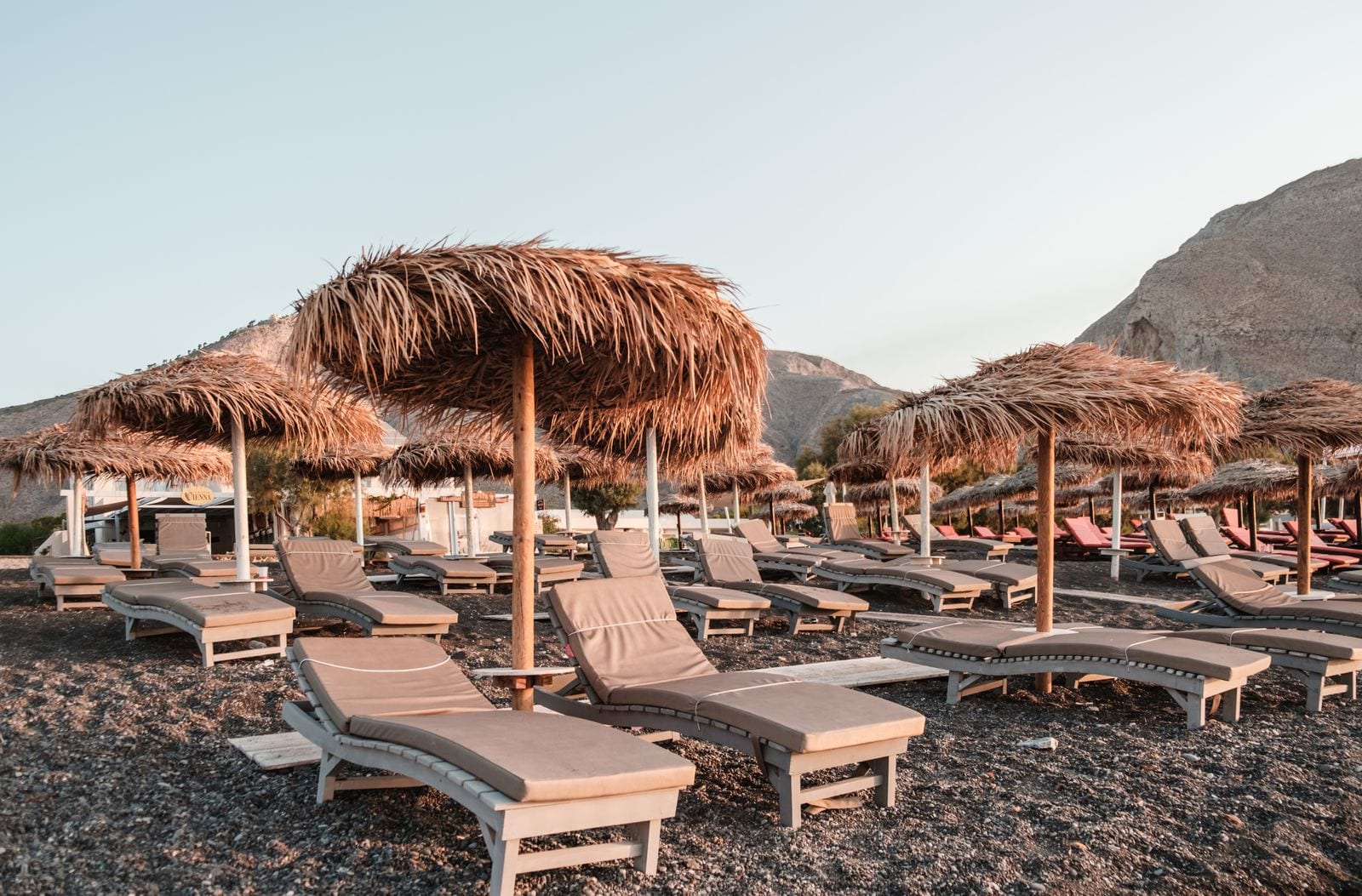
- 구조대는 조직된 해변에만 있습니다. 카마리와 페리사와 같은 큰 검은 모래 해변은 블루 플래그 해변으로 여름 시즌 내내 구조대가 근무하지만, 대부분의 작은 만과 칼데라 수영 장소에는 구조대가 없으므로 그곳에서는 아이들을 주의 깊게 지켜보세요.
- 멜테미 바람. 7월과 8월에는 북풍인 멜테미가 거친 물결과 더 강한 해류를 일으킬 수 있으며, 특히 노출된 해안에서 그렇습니다. 보호되는 날에 수영하고 자신의 수심 내에서 머무르세요.
- 뜨거운 검은 모래. 산토리니의 화산 해변은 정오쯤 되면 맹렬하게 달아오릅니다. 샌들과 비치 매트가 발을 보호해 줍니다.
- 깊은 칼데라 물. 칼데라 쪽의 수영 장소는 급격히 깊어지고 점진적인 얕은 진입로가 없으므로, 어린 아이들보다는 자신 있는 수영자에게 적합합니다.
산토리니에서 수도꼭지 물을 마실 수 있나요?
산토리니에는 천연 담수원이 없으므로 거의 모든 수도꼭지 물은 역삼투 담수 공장을 통해 처리된 바닷물입니다. 이 물은 그리스와 EU 음용수 기준을 충족하도록 처리되어 이를 사용하여 이를 닦거나, 샤워하거나, 음식을 씻는 데는 괜찮습니다. 실제로는 거의 모든 현지인, 호텔, 레스토랑이 병입수를 마십니다. 왜냐하면 담수화된 공급원은 종종 뚜렷하게 짭짤하거나 짠 맛이 나고 네트워크가 섬 전체에서 항상 일관되지 않기 때문입니다. 병입수는 저렴하고 어디서나 구할 수 있습니다: 1.5리터 병은 슈퍼마켓에서 약 €0.50에서 €0.80이며, 다량 구매 시 더 저렴합니다. 플라스틱을 줄이고 싶다면, 내장 필터가 있는 병이 맛을 잘 처리해 줍니다.
모기와 기타 실용적 고려사항
모기는 따뜻한 여름 밤에 존재하지만, 산토리니에는 말라리아나 유사한 모기 매개 질병이 없으므로 번거로움일 뿐 건강 위험은 아닙니다. 방에 플러그인 모기 퇴치제와 저녁 외출용 작은 모기 퇴치제 한 병이면 충분합니다. 더 큰 여름 위험은 태양입니다: 에게해의 빛은 강렬하므로, 고자외선 차단제, 모자, 정오 시간대의 그늘이 물속의 어떤 것보다 중요합니다.