The flight from Athens to Santorini takes about 45 to 55 minutes, while the ferry from the port of Piraeus takes roughly 5 hours on a high-speed boat or 7 to 9 hours on a large conventional ship. If your time is tight you fly; if you want to save money, carry more luggage, or enjoy the open-sea approach to the caldera, the ferry earns its place. This guide weighs both for anyone arriving at or leaving Santorini (Thira) International Airport, including how the choice shifts once you factor in baggage, summer wind, and the day of your return flight.
Which is faster, flying or the ferry?
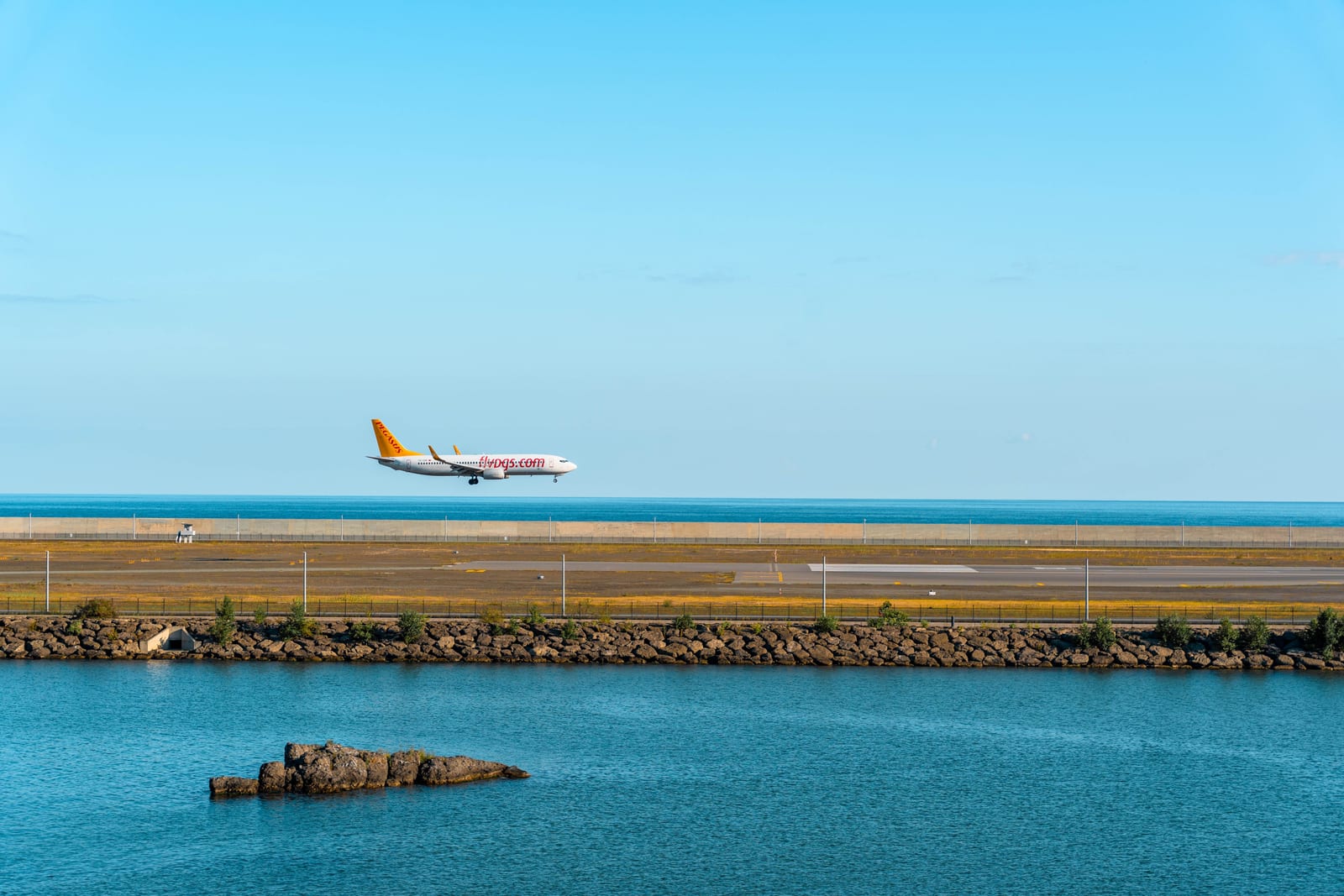
Flying wins on raw speed by a wide margin. Aegean, Sky Express, Volotea, and Ryanair run direct hops between Athens (ATH) and Santorini (JTR), and in summer the route sees well over a hundred flights a week. The plane is in the air for under an hour. Count the realistic door-to-door time, though, and the gap narrows: check-in, security, boarding, and the ride from JTR into Fira or Oia push the true total to around 3 to 4 hours. Domestic hops at Athens often board from remote stands by shuttle bus rather than a jet bridge, which adds 15 to 20 minutes on the tarmac.
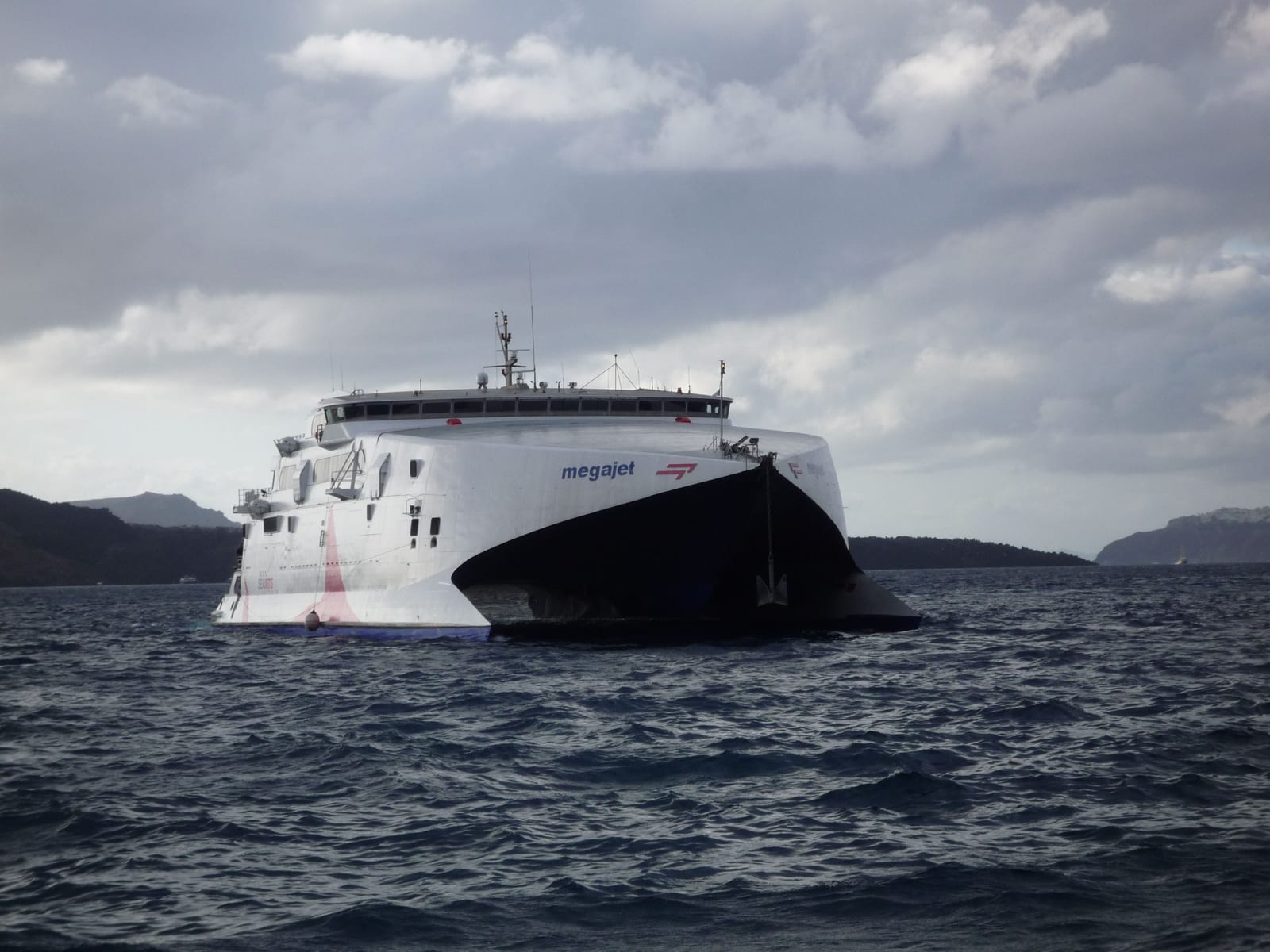
The ferry runs on a different scale. High-speed catamarans cross in about 4 hours 50 minutes to 6 hours. The big conventional ships take roughly 7 hours 45 minutes to just over 9 hours, with stops at other Cycladic islands along the way. Up to eight sailings a day run in peak summer, thinning out sharply in winter.
| Option | Travel time | Typical 2026 fare (one way) | Best for |
|---|---|---|---|
| Flight (ATH to JTR) | 45–55 min in air; ~3–4 hr door to door | €40–150+ | Short trips, tight connections, winter |
| High-speed ferry | ~5–6 hr | €60–110+ | Daytime crossing, moderate luggage |
| Conventional ferry | ~7 hr 45 min – 9 hr | €46–65 | Budget, heavy bags, rough-weather reliability |
What does each option cost in 2026?
Flight fares swing the most. Booked early or off-season, a one-way ticket can land near €40; in July and August, or at short notice, it climbs past €150. The headline price also hides a catch. The cheapest fares on the low-cost carriers cover a cabin bag only, so a single checked suitcase often adds €25 to €50 each way, which can close the gap to a flexible ferry ticket.
Ferries split by speed. A conventional crossing starts around €46 to €65 for a standard seat, the steadiest value on the route. High-speed catamarans run higher, often €60 to €110 or more, and rise again for reserved airline-style seating or a cabin. Children, and a vehicle if you bring a rental, carry separate fares. You can check live prices and timetables directly with the operators: Blue Star Ferries runs the conventional ships, while SeaJets covers the high-speed catamarans. Conventional sailings usually leave Piraeus from the E6 to E9 gates, and the port is large enough that walking between the wrong gates can take 30 minutes, so confirm your gate before you arrive.
As a rough yardstick, two adults flying round trip in shoulder season commonly pay €200 to €450 once checked bags are added, against roughly €185 to €260 for the same pair on a conventional ferry both ways. The figures sit close enough that comfort, timing, and luggage usually decide it rather than price alone. In July and August the cheapest ferry seats and the lowest flight fares both sell out early, so booking two to four weeks ahead protects the better rates on either side.
When is the ferry the better choice?
The ferry pays off in several common situations, and not only for budget travellers.
- You travel with heavy or multiple bags. Ferries let you bring luggage aboard without the per-bag fees that pile onto cheap flights.
- You want the scenery. The approach into Santorini's caldera by sea, with the cliffs and Oia rising above the water, is a sight the plane skips.
- You would rather skip the airport routine. You avoid the security line and liquid limits, and you board with your bags in hand.
- You are travelling overnight. A late conventional sailing can double as a moving hotel and save a night's accommodation.
- The weather looks rough. The large conventional ship rides through wind that cancels the fast boats and even some flights.
The trade-off is the hours you give up. A 7 to 9 hour conventional crossing eats most of a travel day, so it suits people with time to spare more than someone on a long weekend.
When should you fly instead?
Flying is the clear call when the clock matters. On a short trip the difference between a 50-minute flight and a 7-hour sailing is a full day of holiday saved. The plane also runs reliably year-round, while ferry frequency drops off from November to March. A late evening arrival into Athens, a tight onward connection, or an early checkout all tilt the decision toward the air. Anyone arriving on a long-haul flight into Athens usually prefers the quick hop over a half-day at sea on top of the long flight already behind them. Domestic flights ask you to be at JTR about 90 minutes before departure, and the compact terminal backs up when several departures cluster, so build that into any tight plan.
If you do fly, plan the ground leg before you land. Santorini Airport sits close to the main resort areas, but taxis are scarce and the queue at arrivals can run long in summer. Booking a private transfer through GetTransfer in advance puts a driver at the door with your name, whatever time you touch down.
The wind factor most travellers miss
From July into September the meltemi, a strong north wind, sweeps the Aegean and can reach Beaufort force 7 to 9. It changes the ferry maths in a way booking sites rarely flag. High-speed catamarans are light and enclosed, and operators suspend them first, often once winds hit force 7 or 8. The heavier conventional ships keep sailing in conditions that ground the fast boats. So in a windy week the slower conventional ship is the more reliable bet, the reverse of what most travellers assume when they pay extra for speed.
This feeds the single most expensive mistake on the route: taking the ferry on the same day as your flight home. A cancelled or delayed sailing can cost you the flight, because you still have to reach the airport with time to check in. Leave a clear buffer. If you sail back to the mainland, do it the day before your flight rather than the morning of it, and treat your time at the airport as fixed rather than something to shave.
Arriving by air or by sea: the airport connection
However you cross, the last stretch on Santorini is short but worth planning. If you fly, you land at JTR and head straight to your transfer or the taxi rank. If you take the ferry, you dock at Athinios, the island's main port, which sits about 9 km from the airport and a similar climb below Fira on a steep switchback road. There is no train and no direct airport-to-port bus, so a pre-booked car is the simplest link when your plans combine the two, for example a ferry in and a flight out. Our guide to the airport-to-Athinios-port route covers that transfer in detail, and GetTransfer can quote a fixed fare for the port run.
For most visitors on a week or less the flight protects the holiday time; for budget trips, big luggage, or anyone who wants the sea approach, the conventional ferry is the steady, scenic value. Match the choice to your dates, your bags, and the forecast, and confirm flight details on the official Santorini Airport site before you travel.
Crossing times, sailing frequencies and fare ranges on this page were re-checked in July 2026 against the published Piraeus–Santorini schedules of Blue Star Ferries, Seajets and Fast Ferries, and against Athens–Santorini fares from Aegean, Sky Express and Volotea. Summer schedules change week to week and fares move with demand, so confirm both before you book.
Note that this comparison describes the main season. From November to March the calculation changes: high-speed boats thin out to as little as one a week while the Athens flight keeps going — the winter picture is in Santorini in winter 2026/27.
One practical difference the tables above do not show: arriving by ferry usually means landing at Athinios with a check-in still hours away. If that is your day, luggage storage at Santorini port and in Fira covers the point beside the quay and the ones in town.