Santorini Airport (JTR) has a single terminal that handles both domestic and international flights from one compact building about 6 km from Fira. It looks like a large white Cycladic house and is run by Fraport Greece, which took over the airport in 2017 and rebuilt the terminal by 2021: the project raised the terminal area by about 235% to around 15,640 square metres and added check-in desks, gates and security lanes. Even after that work it stays small for the traffic it takes, and at the height of summer in 2026 the building still fills up fast. For the wider picture – distances, parking and how arrivals and departures work – see our Santorini Airport guide.
Inside the terminal: the layout
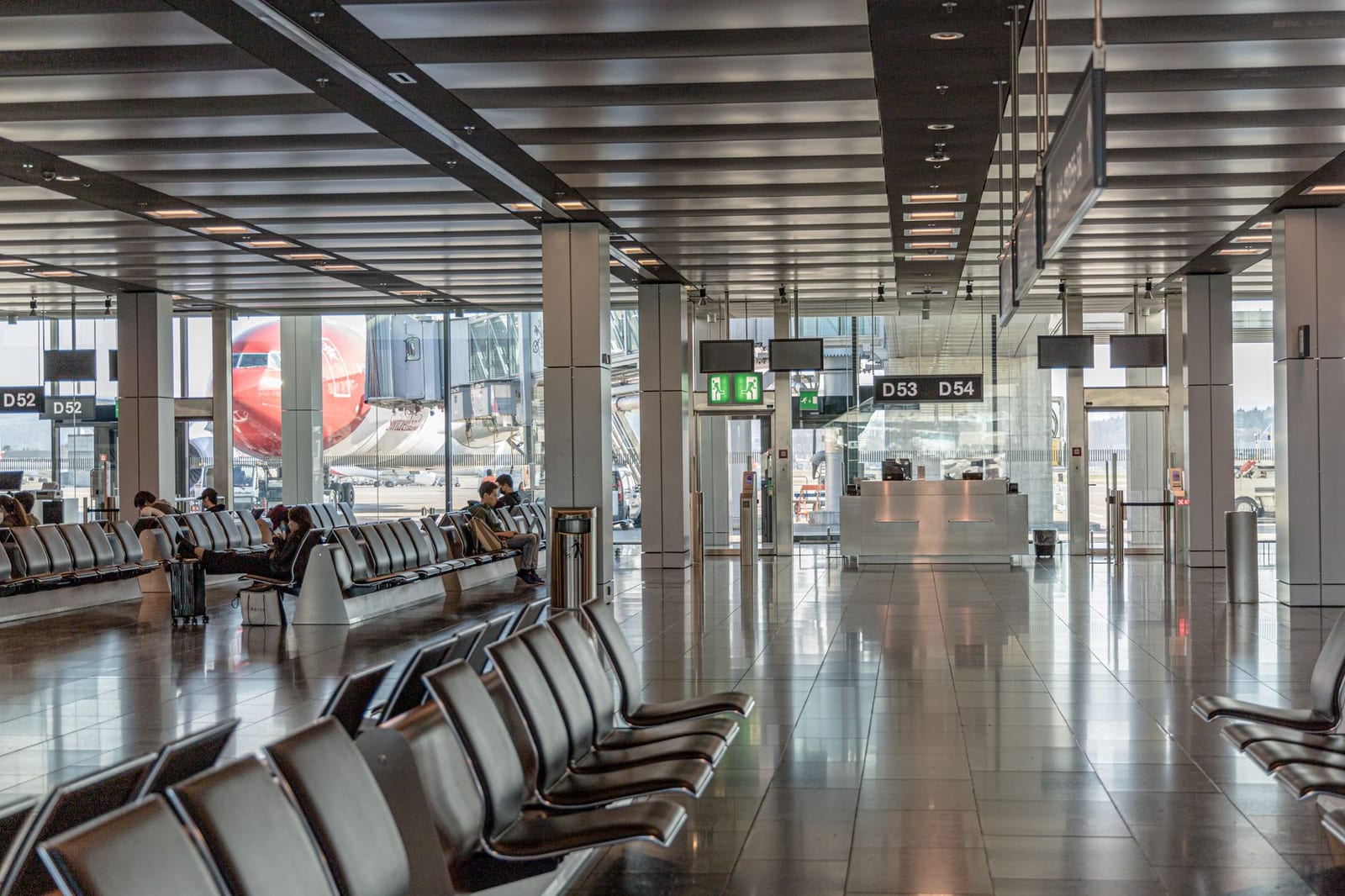
Everything sits on one level a short walk apart: check-in, a single security control, the departures area and one baggage hall. That makes the airport easy to move through, even with heavy luggage, but it also leaves little room to spread out when several flights land or leave together. The area before security holds the check-in desks, a couple of cafes and a few souvenir shops; past security you reach the duty-free shop, more food and the gates.
The 2017–2021 rebuild widened every pinch point rather than adding floors: check-in stations rose by about 112%, security lanes by 250%, baggage belts doubled, and the departure gates grew by roughly 20%. The redesigned apron can now park up to nine airliners at once. There is still no left-luggage office, so plan around your flight rather than storing bags here.
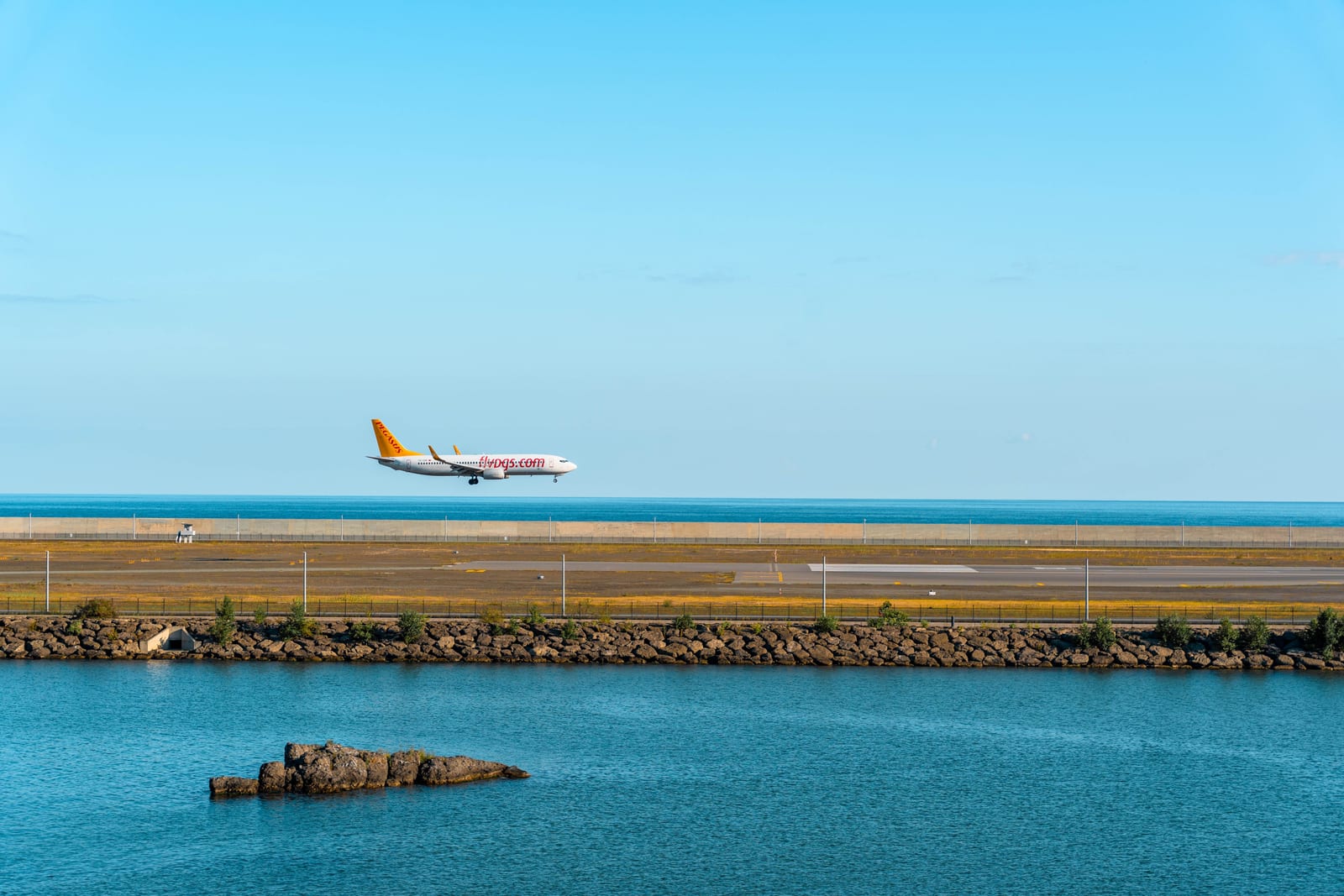
Because aircraft park on the open apron, there are no jet bridges: you reach the terminal either on foot down the aircraft steps or by a short apron-bus ride, depending on where the plane parks. Either way you spend a moment outside, so weather and reduced-mobility needs matter more than at a big airport. Travellers who need help crossing the apron should arrange it through their airline in advance; see our special assistance guide.
Arrivals: what to expect
After you reach the building from the apron, on foot or by apron bus, the path depends on where you flew from. Arrivals from inside the Schengen area go straight toward the baggage hall. Arrivals from outside it, including non-EU international flights, pass through passport control first, where the EU's automated entry and exit checks, known as the EES, record fingerprints and a photo on first entry and can make the line slower in peak weeks. You then collect bags in the single hall and step out to the forecourt. The taxi rank is directly outside the exit, the KTEL bus stop is opposite it, and car rental desks are at arrivals. For the full walkthrough see our arrivals guide.
Departures and check-in
Check-in desks open on each airline's own schedule, usually two to three hours before the flight, so confirm your carrier's window before you set out. After check-in you pass through the single security control into the departures area. Seating past security is limited and the hall gets warm and crowded when several departures bunch together, so it is worth using the toilets, filling a water bottle and doing any shopping before you settle near the gate. Our departures guide covers the flow, and the peak-season timing guide explains how early to arrive in summer.
Food, shops and facilities
For its size, JTR covers the essentials rather than offering a wide choice. Knowing what sits before and after security helps you decide where to wait.
| Facility | Where | Detail |
|---|---|---|
| Cafes and food | Before and after security | A couple of cafes before security, more cafes and snacks after; choice is limited, so do not count on a full sit-down meal |
| Duty-free and shops | Mostly past security | One Hellenic Duty Free shop after security, plus a few small souvenir shops before it |
| ATMs and exchange | Before and after security | Cash machines from Greek banks and a bureau de change |
| Free Wi-Fi | Whole terminal | Connect to the "Fraport-Free" network and open a browser to sign in |
| Lounges | None | There is no airport lounge of any kind at JTR |
| Car rental | Arrivals | Desks for the international chains and local agencies at arrivals level |
| Other | Various | Charging points, drinking water, a first aid room and lost property |
You can check the current list of shops and eateries on the official Santorini Airport website. For what to buy tax-free, see our duty-free guide.
Opening hours
The terminal works to the flight schedule rather than fixed retail hours. It opens around 06:30 in the morning and closes in the late evening, roughly 22:15 to 23:00, running later in peak summer 2026 than in the quieter winter. JTR is not a 24-hour airport and closes overnight, so you cannot wait inside through the small hours; if you land very late or leave very early, plan a hotel or a transfer around that. Check your airline's check-in window and your flight time for the hours that actually matter to you.