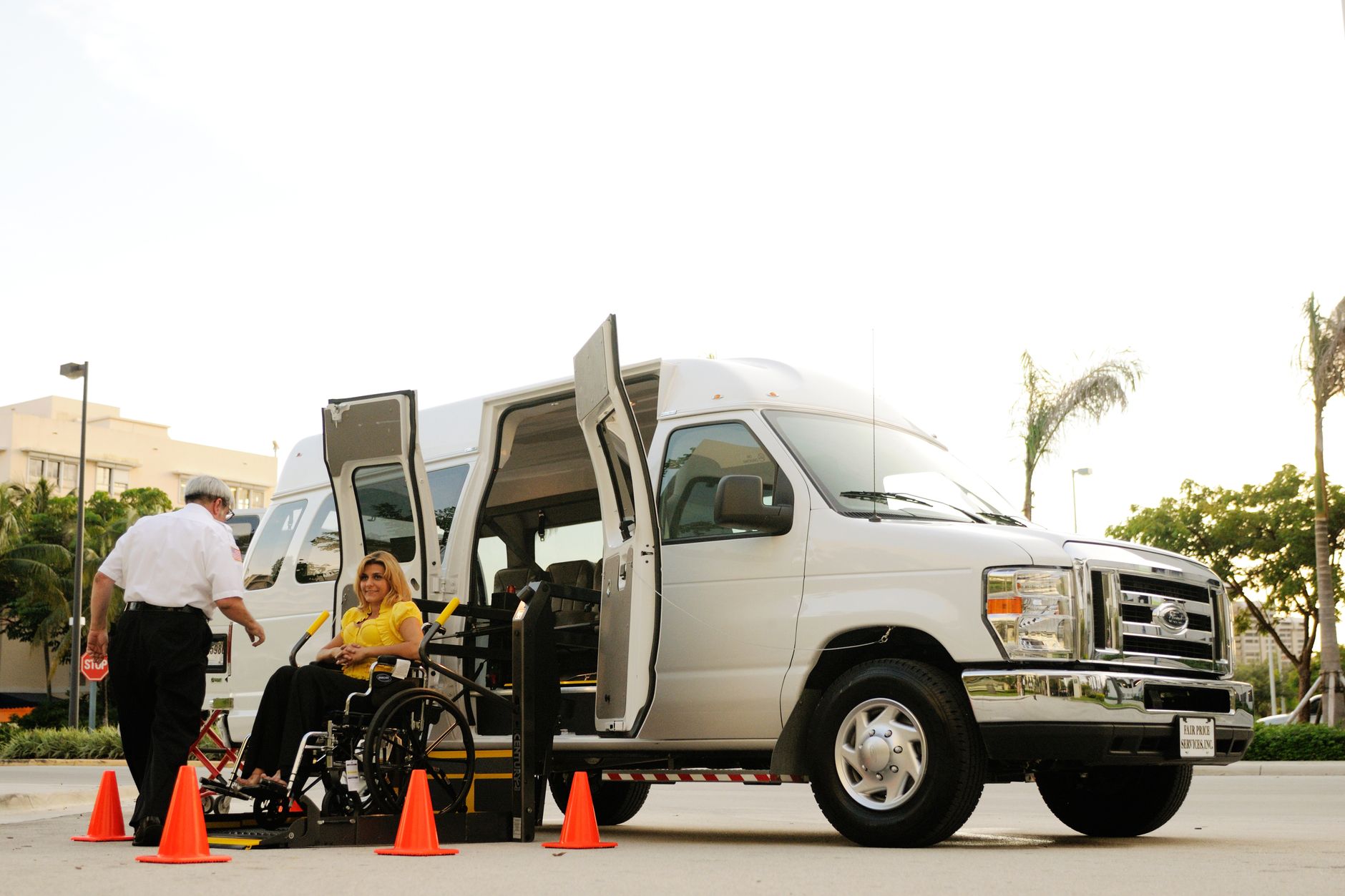
If you or someone you travel with needs help getting through Santorini Airport, assistance is free and it is a legal right, but you have to ask for it the right way. Under EU law you request special assistance through your airline, not the airport, and you must do it at least 48 hours before departure. Santorini has one extra catch that bigger airports do not: planes are usually boarded from the tarmac by steps or bus, so wheelchair users need to arrange lift-assisted boarding in advance. Plan those two things and the airport side of the trip is straightforward.
How do you request special assistance?
Tell your airline, not the airport. Under EU Regulation 1107/2006, the airport must provide assistance free of charge as long as your need was notified to the air carrier, its agent, or your tour operator at least 48 hours before the published departure time. The airline then passes the request to the airport's ground team.
Add the request when you book, or afterwards through the airline's site or call centre. On Aegean, for example, you flag it during booking or by phoning at least 48 hours ahead; Sky Express handles it the same way through its special-assistance channel. When you ask, be specific about how much help is needed, because airlines use standard codes: WCHR for someone who can walk short distances and manage steps but not long distances, WCHS for someone who cannot manage steps, and WCHC for someone who is immobile and needs help to and from the aircraft seat. Naming the right level means the correct equipment is waiting for you.
If you give less than 48 hours' notice, you are not turned away. The airport must still make all reasonable efforts to help you make your flight, but the guaranteed service is the one you booked in time, so treat 48 hours as the real deadline.
What the airport provides
Once you have pre-booked, the help runs from the moment you arrive to the moment you are in your seat, and back again on landing. On arrival at Santorini you present yourself either at your airline's check-in desk or at the airport's designated assistance point and let the ground team know you are there. From there, staff help you through check-in, security, and passport control where it applies, and take you to the gate and onto the aircraft.
Two money points matter. Assistance itself is free, and so is your mobility equipment: airlines carry wheelchairs and similar aids at no charge and do not count them against your baggage allowance, and you can usually bring two pieces of mobility equipment. For how the halls and the assistance point sit within the building, see the Santorini Airport terminal guide, and for what to expect on the way in, the Santorini Airport arrivals guide.
A few other cases are worth flagging when you book. A recognised assistance dog travels with you in the cabin, but it needs the same pet-entry paperwork as any animal, so sort the microchip and rabies records early. If your condition is not visible, such as autism, a heart condition, or reduced stamina, you can still ask for help. The Hidden Disabilities Sunflower lanyard, a discreet signal for a non-visible disability, is recognised at major Greek airports such as Athens and Thessaloniki and is worth wearing, but still register your needs with the airline rather than counting on staff at a smaller airport like Santorini to spot it. The regulation lets an airline require you to travel with a companion only for genuine safety reasons, for example if you could not help evacuate yourself, so if you are told you need one, ask why and check it against your booking.
Boarding without a jet bridge: the Santorini catch
This is the detail travellers most often overlook when planning for Santorini. The airport has no jet bridges, so most flights board across the apron, either by a short bus ride to the aircraft or on foot up a set of mobile stairs. For a passenger who cannot climb steps, that means the ground team needs to arrange lift-assisted boarding, such as an ambilift vehicle or an aisle chair, and at a compact airport this equipment can be limited and shared across flights.
The takeaway is to confirm boarding help specifically, not just "assistance" in general, when you book. Ask the airline to note that you cannot use stairs so an ambilift or aisle chair is arranged, and arrive with plenty of time, because lift boarding usually happens before other passengers and cannot be rushed. The same applies in reverse on arrival, when you may wait a few minutes for the lift to reach the aircraft.
Can you bring your own wheelchair?
Yes, and it travels free. A manual wheelchair is the simplest case: you can usually use it right up to the aircraft door, where it is taken to the hold and, ideally, returned to you at the door on arrival, though at smaller airports it sometimes comes back at baggage reclaim instead. Ask the crew where you will get it back so you are not left waiting in the wrong place.
Electric wheelchairs need more planning because of their batteries. Airlines apply dangerous-goods rules to lithium and wet batteries, so you must declare the wheelchair and battery type when you request assistance, ideally well beyond the 48-hour minimum, so the airline can confirm it can be carried and how the battery must be prepared. If your equipment is damaged in transit, the EU rules give you the right to have it repaired or replaced, so report any damage before you leave the airport.
Getting to and from the airport with reduced mobility
Santorini itself is the harder part of the trip. The island is steep and many streets in Fira and Oia are stepped or cobbled, and the public KTEL buses are generally not wheelchair accessible. Airport taxis are limited in number and cannot be relied on to carry a wheelchair or provide a step-free vehicle, especially in a busy summer queue.
The dependable option is a pre-booked accessible transfer where you state the requirement in advance. Requesting a wheelchair-accessible vehicle through GetTransfer means a suitable car and driver are arranged before you land, rather than gambling on the rank. If you are travelling as a family and coordinating assistance alongside young children, the practical timing notes in the Santorini Airport with kids guide are worth a read too.
How early should you arrive?
Give yourself more time than a standard trip. Assistance means checking in at the desk rather than a self-service drop, the ground team may be moving between several flights, and lift-assisted boarding takes longer and starts earlier than normal boarding. As of 2026 the airport is still handling heavy peak-season crowds, so a comfortable buffer is the single best thing you can do for a calm departure. The guide on how early to arrive at Santorini Airport gives sensible baselines; if you have booked assistance, add to them rather than trimming them, and confirm your request with the airline a day or two before you fly. A short phone call to re-confirm the wheelchair or ambilift booking is the cheapest insurance there is, and it means the ground team is expecting you by name rather than scrambling on the day.